When designing a home that balances heritage aesthetics with modern performance, two flooring options often dominate the conversation: Athangudi Tiles and Terrazzo Flooring.
Both are celebrated for their “handmade” appeal and incredible longevity, but they cater to very different design philosophies. This guide breaks down everything you need to know to make the right choice for your space.
Athangudi Tiles
Originating from the Sivaganga district of Tamil Nadu, these tiles are a masterpiece of Indian craftsmanship.
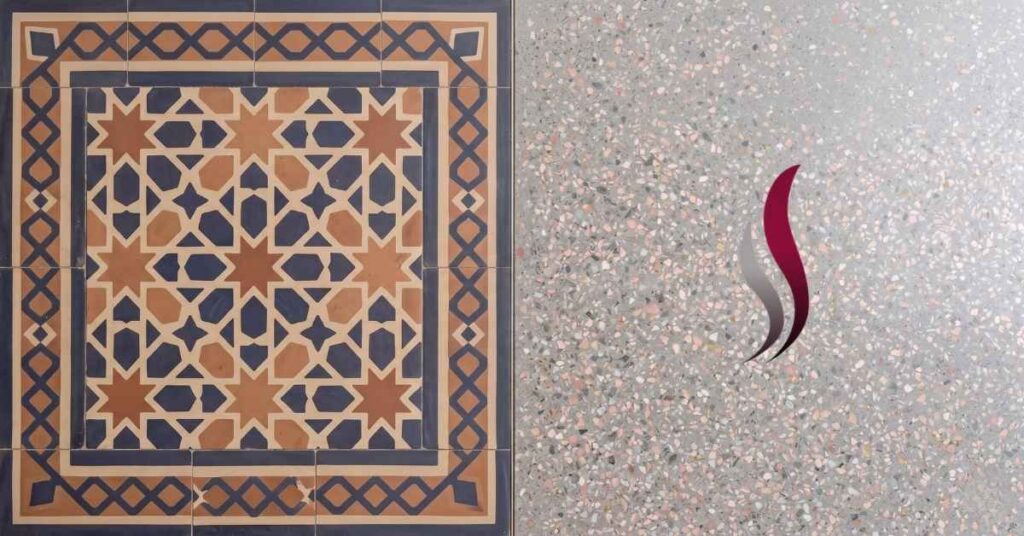
- The Look: Vibrant earth tones, intricate floral patterns, and geometric motifs with a unique “glass-like” sheen.
- Vibe: Traditional, warm, and artisanal. Every tile is unique, bringing old-world charm to courtyards and living rooms.
- Customization: High in terms of color and stencils, but the patterns stay rooted in traditional heritage.
Terrazzo Flooring: The Versatile Modernist
- A composite material made of marble, quartz, granite, or glass chips set in cement or epoxy.
- The Look: A distinctive speckled appearance that can be poured seamlessly without joints.
- Vibe: Ranges from mid-century modern to ultra-contemporary and minimalist.
- Customization: Terrazzo offers plenty of design flexibility. You can choose the base colour and the size, colour, and density of the stone chips to create a floor that suits your interiors. If you’re exploring different options, read our guide to terrazzo flooring patterns to learn how to choose the right design, colour, tile size and finish for your home.
Durability & Performance
Athangudi Tiles
- Lifespan: Can last over 100 years. Interestingly, they get shinier as they age and are walked upon.
- Sensitivity: Being cement-based and handmade, they are porous. They require proper sealing to prevent oil and food stains.
- Maintenance: They stay naturally cool, which is a massive advantage in tropical climates like Hyderabad.
Terrazzo Flooring
- Lifespan: Virtually indestructible. This is why it’s the standard for high-traffic areas like airports.
- Sensitivity: Highly resistant to scratches and moisture. Epoxy-based terrazzo is waterproof and non-porous.
- Maintenance: Very low. Once polished and sealed, it only requires basic mopping. It can be re-polished every 20 years to look brand new.
Key Installation Differences
- Athangudi: A slow, rhythmic process. The tiles are laid with very thin joints using a cement slurry. Finding skilled artisans is the biggest challenge.
- Terrazzo: The “poured” version involves a multi-step process: pouring, curing, and multiple rounds of heavy-duty grinding and polishing. It is a messy but rewarding process.
Which One Should You Choose?
Choose Athangudi Tiles if:
- You want a home that tells a story of Indian heritage.
- You prefer an eco-friendly, low-carbon footprint material.
- You love the “warmth” of handmade, slightly imperfect textures.
Choose Terrazzo Flooring if:
- You want a seamless, high-end “luxury hotel” look with no grout lines.
- You have a busy home with pets or children where durability is the priority.
- You want a specific, custom color palette to match modern furniture.
Conclusion
While Athangudi brings the heart of a village to your home, Terrazzo brings the sophistication of modern engineering. Both are excellent investments that will outlast almost any other flooring material on the market.