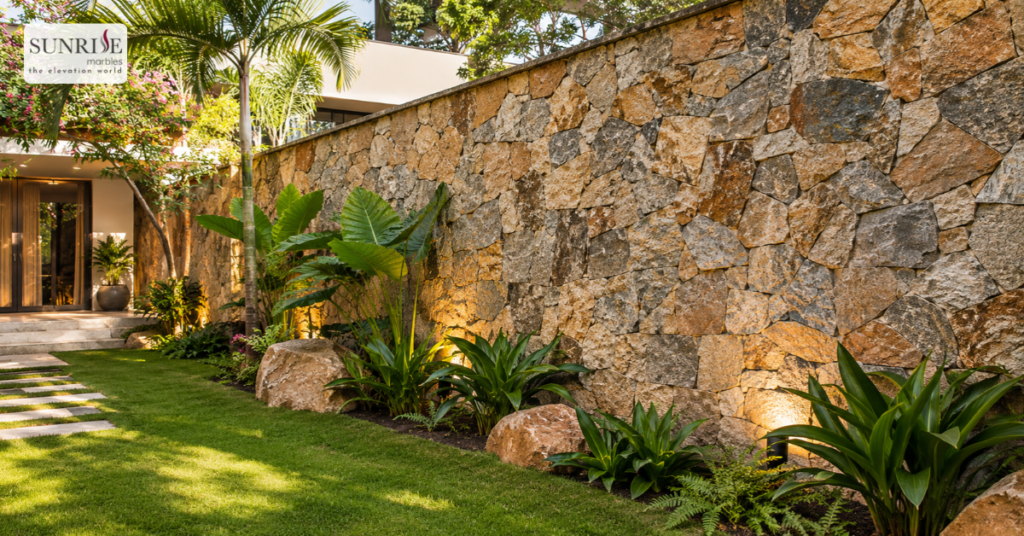
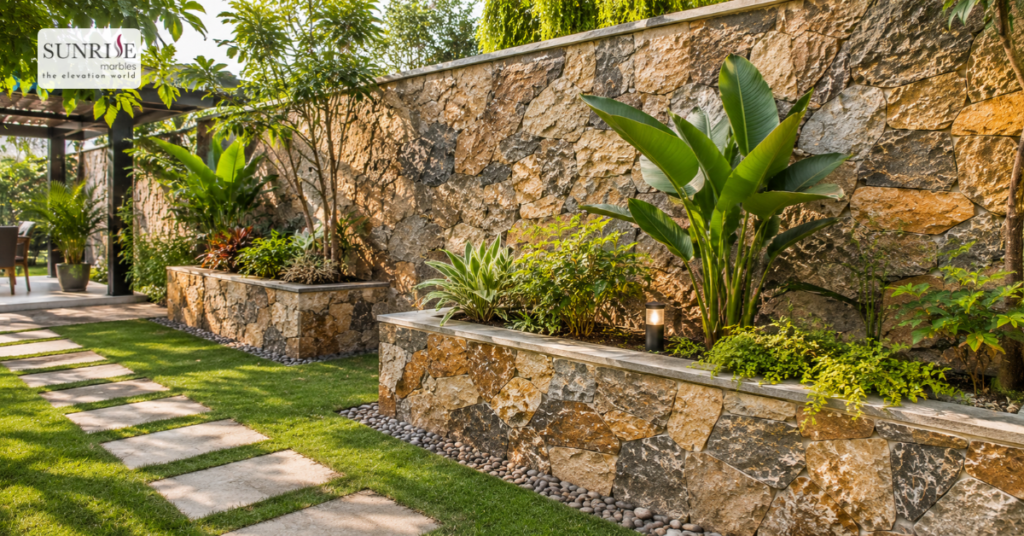
Raw stone cladding gives a garden wall a rough, natural face that smooth stone cannot match. It looks hand-built, goes well with plants and handles Hyderabad’s hot sun and heavy rain. If you are planning a garden wall, a planter box or a water feature like a fountain or small pond, raw stone cladding is worth a look. This guide explains what it is, where it works best and what to check before you choose it.
Raw stone cladding is natural stone with a rough, unpolished face. It suits garden walls, planter boxes, gate pillars and water features. Ask to see wet samples, expect pieces of different sizes and order a little extra.
What Is Raw Stone Cladding?
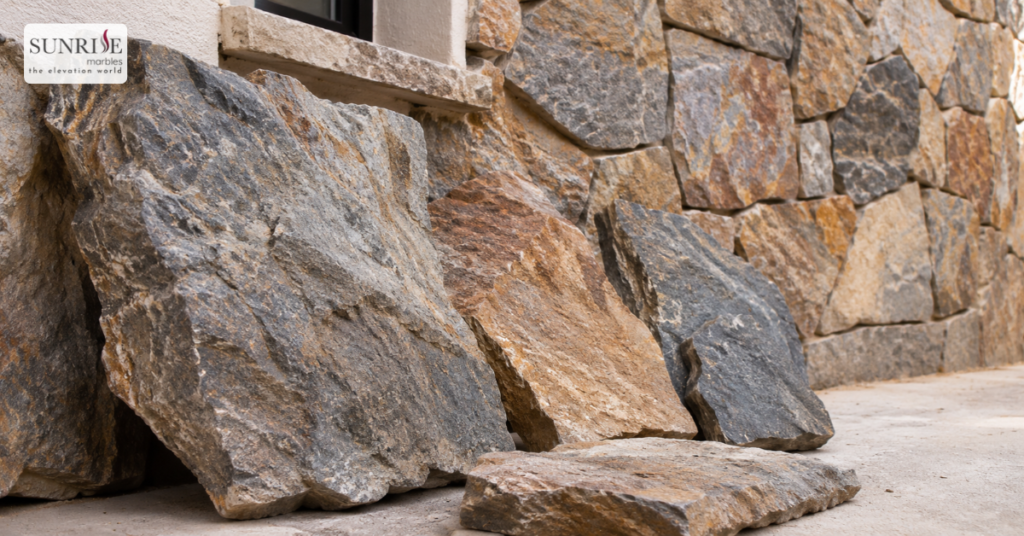
Raw stone cladding is natural stone left with a rough surface instead of a shiny, polished one. Each piece keeps the shape and grain of the stone, so no two pieces match and the finished wall has a real, natural look. Sunrise Marbles has raw cladding in its landscape products range, next to garden pebbles. If you want the basics of cladding first, read our guide on what facade cladding is.
Where Does Raw Stone Cladding Work Best in a Garden?
Use | Why raw stone suits it | Watch out for |
|---|---|---|
Garden walls | The rough face looks rustic and hides dust | Uneven edges need careful fixing |
Fountains and ponds | Wet stone turns darker and looks natural | Green layer in shady spots, so clean it often |
Planter boxes and raised beds | The stone joins the plants and the wall nicely | Water must drain out from behind the stone |
Gate pillars | A strong, solid look | Use the same finish on both pillars |
The place matters as much as the use. A wall in full sun dries fast. A wall that gets splashed by a fountain, or sits in shade, stays damp longer and can grow moss. Choose the stone and the spot together.
How Raw Stone Is Different From Smooth Cladding
- Look. Smooth cladding looks neat and modern. Raw stone looks rough and natural.
- Grip. A rough face is less slippery than a polished one. But this is for walls, not for floors.
- Dust. The rough surface holds dust, so a stiff brush works better than a cloth.
- Fixing. Pieces differ in size and thickness, so fixing takes more patience and skill.
Choose raw stone when you want the wall to feel like part of the garden. Choose smooth stone when you want a neat, formal line.
What to Check Before You Choose
- Stone colour. Look at samples outside, in sun and in shade, because colour changes with light.
- Piece size and thickness. Ask how the pieces are supplied and how much they differ.
- Wet look. Pour water on a sample to see how it looks when wet, mainly for fountains and ponds.
- Quantity and budget. Order a little extra, because some pieces will not fit, and rough stone takes more fixing time. Before you fix your budget, read our guide on stone cladding cost for a boundary wall in Hyderabad.
- The mason. Ask whether he has worked with rough stone before.
How to Look After Raw Stone Cladding
Raw stone needs very little care. A stiff brush and plain water are usually enough to remove dust and light dirt. Near fountains and ponds, check for a green layer in shady spots and scrub it off early. Do not use strong acids, as they can mark natural stone. Whether your stone needs a sealing coat depends on the type of stone and where it is used, so ask your supplier.
Pairing Raw Stone With the Rest of the Garden
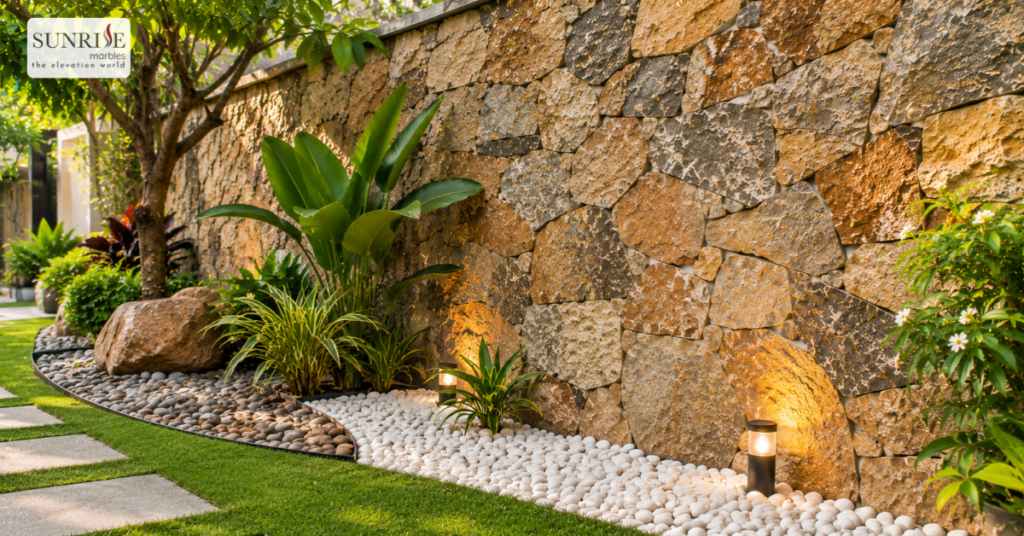
Pairing Raw Stone With the Rest of the Garden
Raw stone looks best next to soft ground cover. Our guide on white pebbles vs river pebbles will help you choose pebbles for the base of the wall. If you are building a full compound wall, see our ideas for boundary wall stone design.
Conclusion
Raw stone cladding gives garden walls and water features a natural look that smooth stone cannot copy. See your sample in real light, wet it, and be ready for pieces that differ. To see the stone, visit Sunrise Marbles at Srinagar Colony Main Road, Yousufguda, Hyderabad, or contact our team on +91 92465 22030.