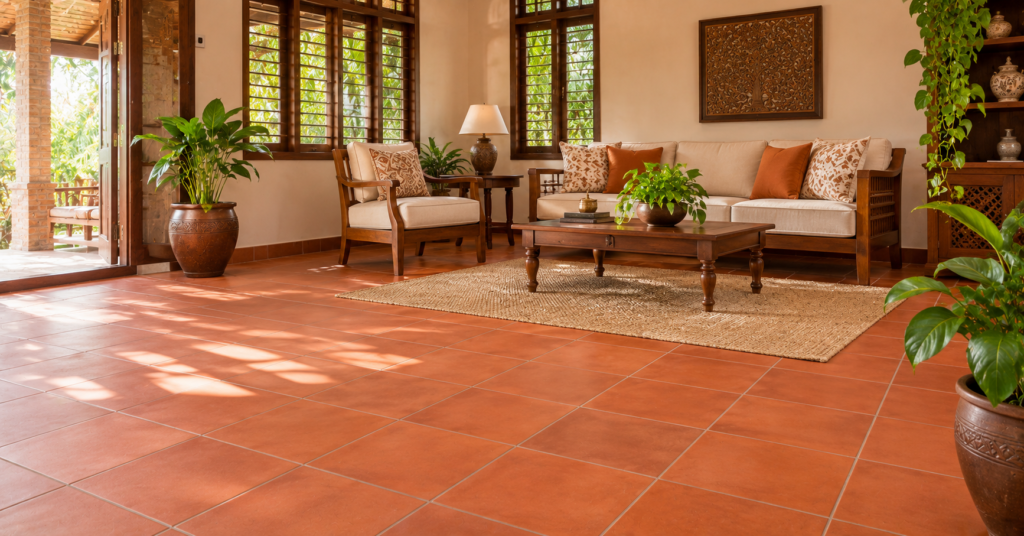
Terracotta floor tiles give a warm, natural look that is hard to get from any other floor. But they also have some limits, so it is good to know them before you decide. Earthen flooring is made from baked clay, and every tile has a slightly different shade. This guide tells you where terracotta floor tiles work well, where they do not, and how to look after them.
Terracotta floor tiles feel cool under the feet and suit halls, sit-outs and open courtyards. They soak up water and oil, so they need a sealing coat and gentle cleaning. They are not the best choice for rooms that stay wet or get heavy spills.
What Are Terracotta Floor Tiles?
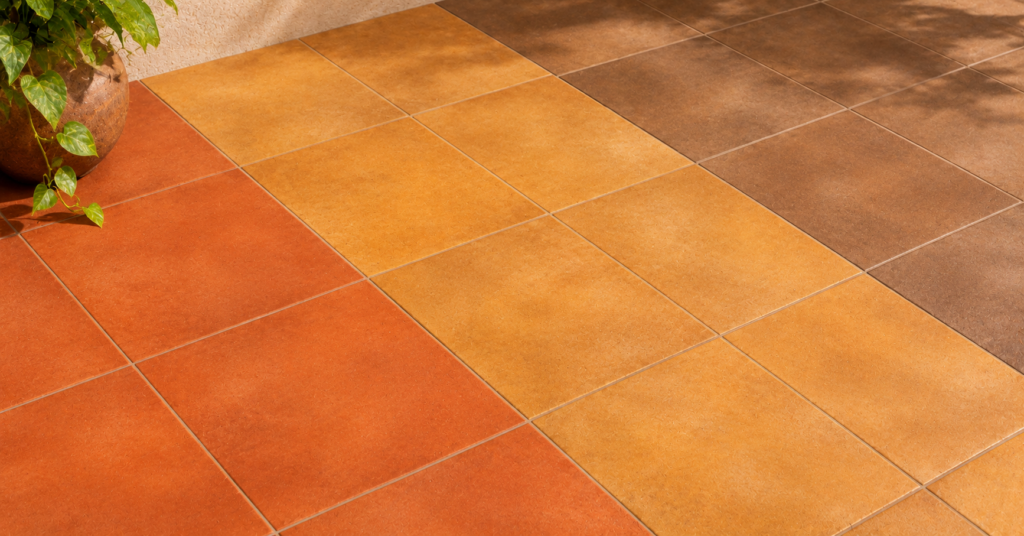
Terracotta means baked earth. The tiles are made from clay and baked at high heat, which gives the red, brown and earthy colours. Sunrise Marbles has earthen flooring in its earthen clay products range. Since the clay is natural, no two tiles look exactly the same, and that is part of the charm.
Where Do Terracotta Floor Tiles Work Best?
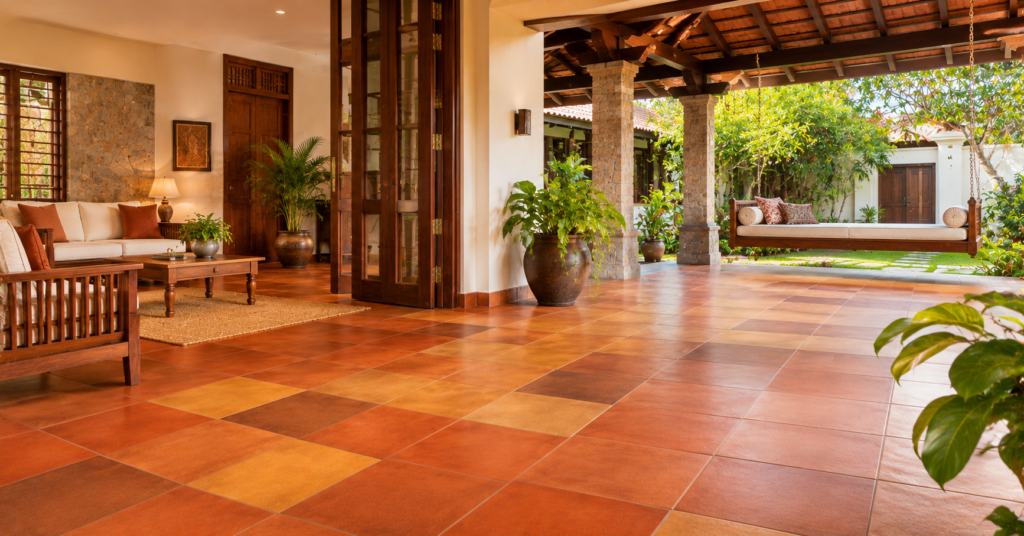
Place | Suitable? | Note |
|---|---|---|
Hall or living room | Good | Warm look. Apply a sealing coat to stop stains |
Bedroom | Good | Feels cool to stand on in hot weather |
Sit-out or verandah | Good | Check the grip when the floor is wet |
Courtyard or open area | Good | Choose tiles made for outdoor use |
Kitchen | Possible with care | Oil and spills stain tiles that are not sealed |
Bathroom | Not ideal | A floor that soaks water is not good for wet rooms |
These are general guidelines. Sunlight, foot traffic and the way you cook all change how a floor behaves. If you are not sure about a room, ask for one sample tile, seal it and keep it for a week before you order the full floor.
What Is Good About Earthen Flooring?
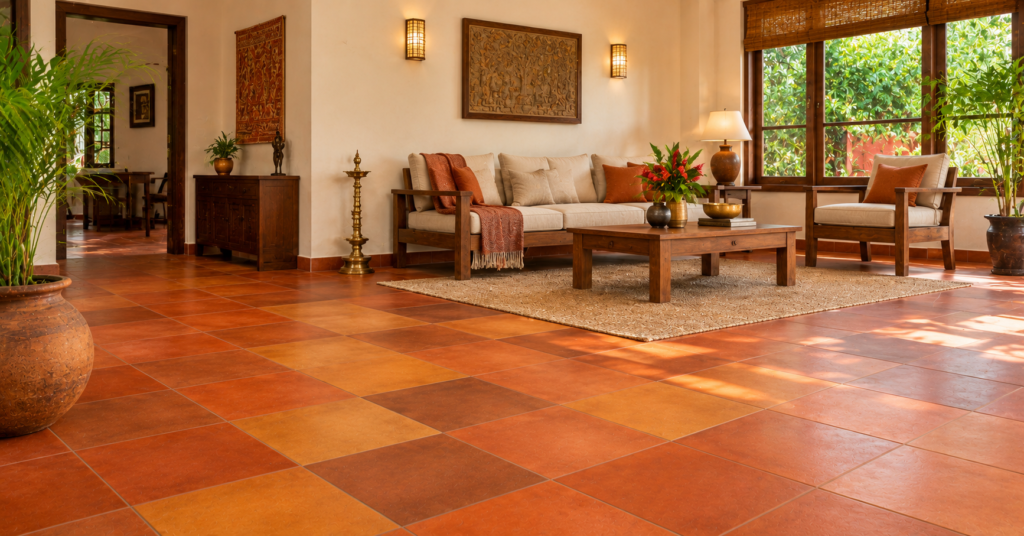
- Cool under the feet. Clay floors feel comfortable in hot weather, which helps in Hyderabad summers.
- Natural look. The shade changes from tile to tile, so the floor never looks flat or machine-made.
- Suits many styles. It looks good in traditional homes and also in modern homes that want a warm, earthy feel.
- Handmade finishes. Rough and handmade surfaces are available, so you can choose between a rustic look and a smoother one.
What Are the Problems?
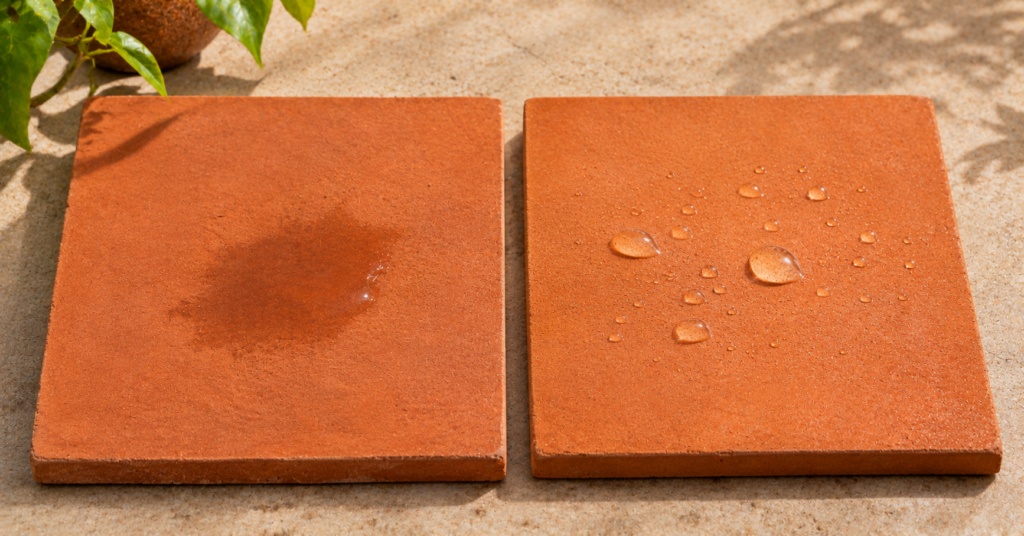
- It soaks water. Tiles without a sealing coat take in water and oil, so they stain easily.
- Colour varies. Some people love this and some find it uneven. Check tiles from several boxes before you decide.
- Edges can chip. A heavy fall, like a dropped pot, can chip an edge.
- It needs a fresh coat. The sealing coat wears off with time and has to be done again.
How to Look After Terracotta Floors
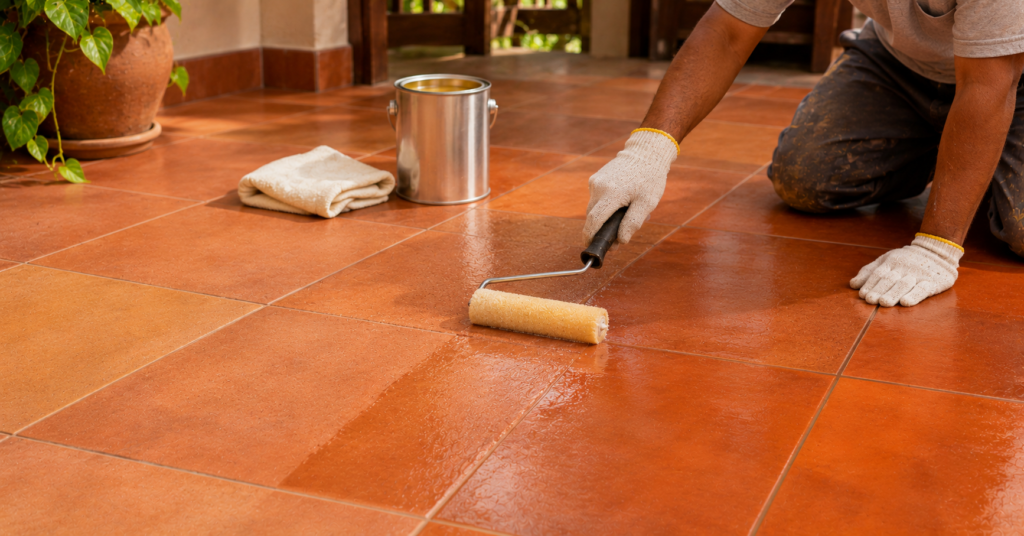
- Seal after fixing. Do this before the floor gets heavy use. Ask your tile worker how to seal before and after filling the joints.
- Sweep daily. Sand and grit scratch the surface over time.
- Mop with a mild cleaner. A damp mop once or twice a week is enough. Do not use acid or strong floor cleaners.
- Wipe spills quickly. Oil, tea and food stain fastest.
- Seal again when water stops forming drops. If water soaks in, the sealing coat has worn off.
Terracotta and Other Traditional Floors
If you like handmade floors, you may want to compare other options too. Our guide on Athangudi tiles vs terrazzo flooring covers two more traditional choices. For open areas where grip matters, our guide on anti-skid outdoor tiles explains slip ratings in simple terms.
What to Ask Before You Buy
- Is the tile plain, rough or glazed (shiny)?
- How should it be sealed, and how often?
- Can I see tiles from the lot I will receive?
- Is the tile fine for outdoor use if I want it outside?
- How many spare tiles should I keep?
Conclusion
Terracotta floor tiles suit people who want a cool, natural floor and do not mind some upkeep. They work best in halls, sit-outs and courtyards, and less well in wet rooms. To see samples, visit Sunrise Marbles at Srinagar Colony Main Road, Yousufguda, Hyderabad. Get Directions to Our Showroom or contact our team on +91 92465 22030. If you like clay for the whole house, read our guide on clay roof tiles.