Athangudi tile design ideas can bring pattern, colour and handcrafted character to a home. Their appeal comes from the way individual motifs come together across a floor, border or selected feature area.
The right design depends on more than how a single tile looks. Pattern size, colour combination, room proportions, lighting and the furniture around it can all change the final result. A detailed floral design may suit a traditional living room, while a simpler geometric pattern can work well in a modern space.
What are the popular Athangudi tile design styles for homes?
Popular Athangudi tile design styles include floral, geometric, symmetrical, multicolour and border patterns. Floral designs can create a traditional feel, while simpler geometric motifs can suit contemporary homes. For a quieter look, use a two-colour pattern or introduce Athangudi tiles only in a defined part of the floor.
Floral Patterns for a Traditional Look
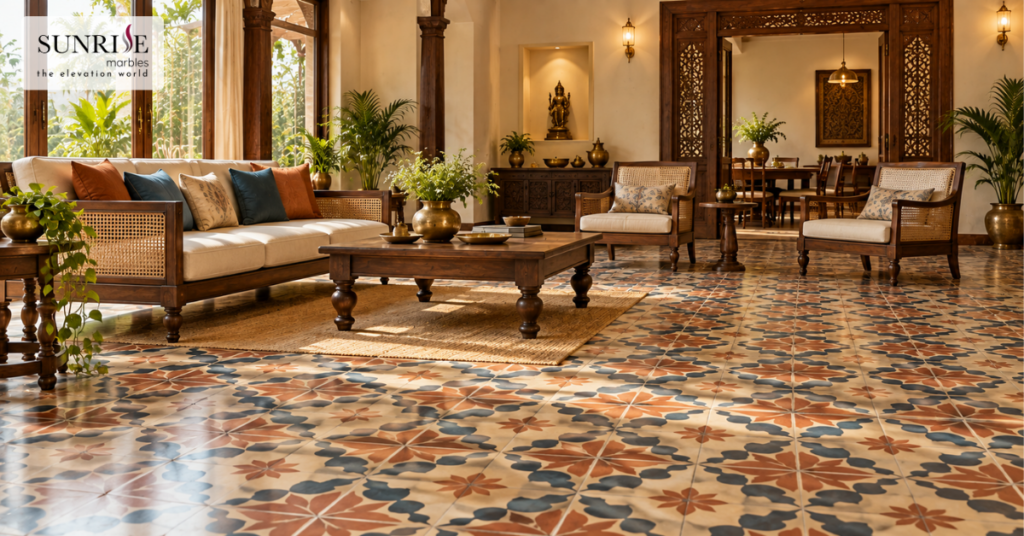
Floral Athangudi patterns are a natural choice for homes with traditional furniture, wooden elements and warm colours. Repeated flowers and other nature-inspired motifs can give a living room or verandah a more classic character.
These patterns do not need to be matched with equally decorative furniture. In many cases, simple furnishings and plain walls allow the floor to become the main feature.
When choosing a floral design, look at the size of the motif. A small, detailed pattern can create a rich overall effect when repeated, while a larger motif may feel more open and noticeable.
Geometric Designs for Modern Interiors
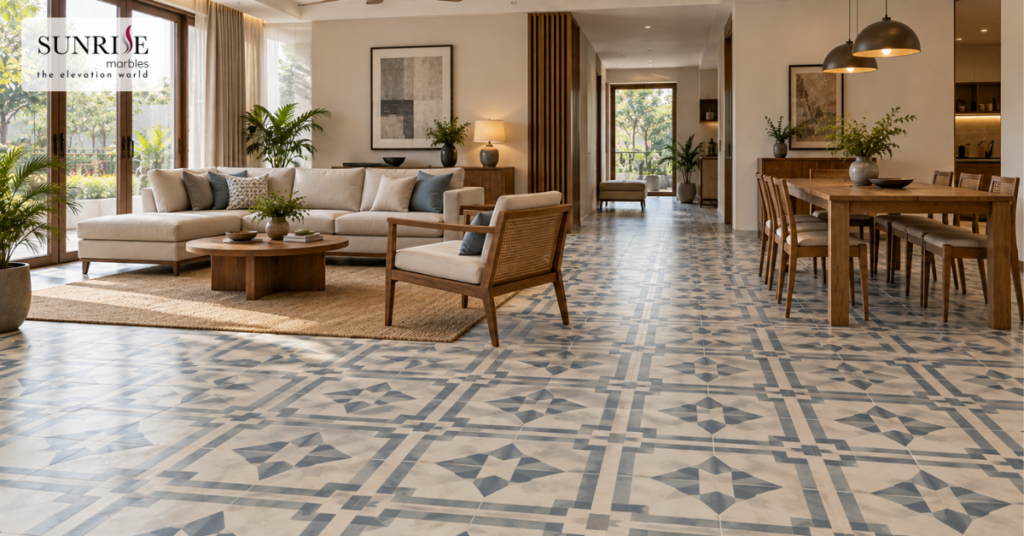
Geometric Athangudi tile designs can bring a cleaner, more structured feel to a contemporary home. Repeated squares, lines and symmetrical shapes can work well with simple furniture, neutral walls and modern lighting.
The advantage of a geometric pattern is that it can add detail without making the room feel traditionally decorated from top to bottom. A carefully chosen design can sit comfortably alongside modern materials and furniture.
For a smaller room, avoid choosing a pattern only because one tile looks attractive. See how the complete repeat looks across several tiles before making the final decision.
Symmetrical Patterns for a Balanced Floor
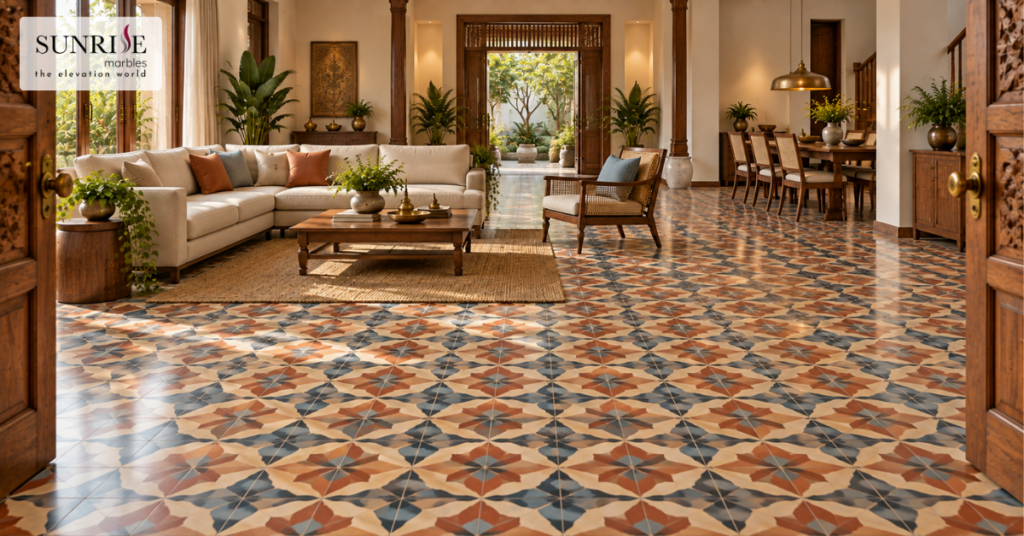
Symmetrical motifs can create a strong sense of order when repeated across a larger floor. They work particularly well when the flooring is visible from the entrance or when the room has a clear central layout.
A symmetrical pattern can also help connect different parts of an open room. Instead of changing flooring between every area, the same design can create a consistent look while furniture defines the individual spaces.
The pattern should still relate to the room’s proportions. A highly detailed design may become too dominant if the surrounding space is already filled with decorative elements.
Border Patterns for Subtle Detail
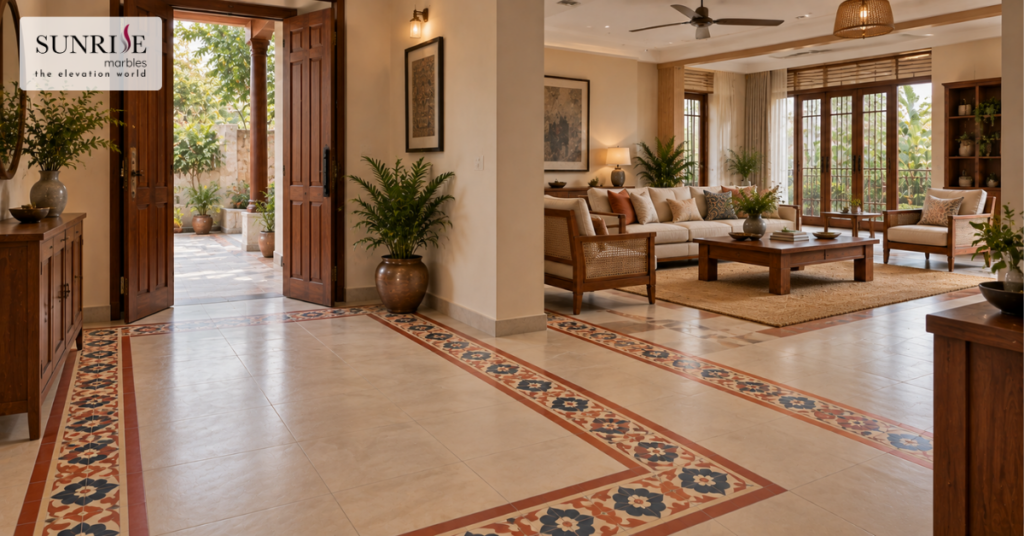
Symmetrical motifs can create a strong sense of order when repeated across a larger floor. They work particularly well when the flooring is visible from the entrance or when the room has a clear central layout.
A symmetrical pattern can also help connect different parts of an open room. Instead of changing flooring between every area, the same design can create a consistent look while furniture defines the individual spaces.
The pattern should still relate to the room’s proportions. A highly detailed design may become too dominant if the surrounding space is already filled with decorative elements.
Multicolour Designs as a Focal Point
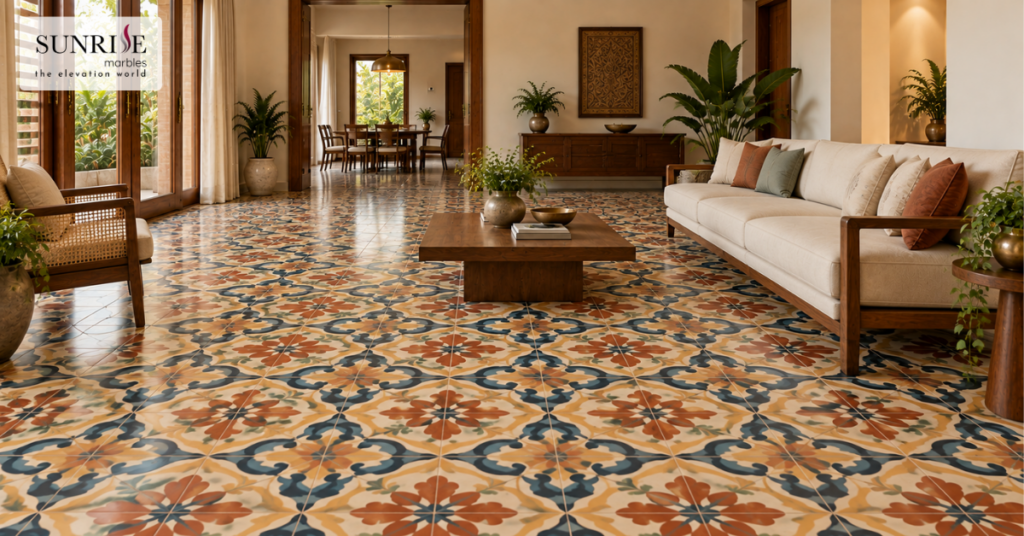
Some Athangudi designs combine several colours with detailed motifs. These can be effective when you want the floor to attract attention and become one of the main features of the room.
With a stronger pattern, the surrounding design can be kept simple. Plain walls, understated furniture and fewer competing patterns give the flooring enough space to stand out.
Because Athangudi tiles are handcrafted, comparing several pieces together is particularly useful when judging how a pattern and colour combination will look across a larger installation.
Two-Colour Patterns for a Simpler Look
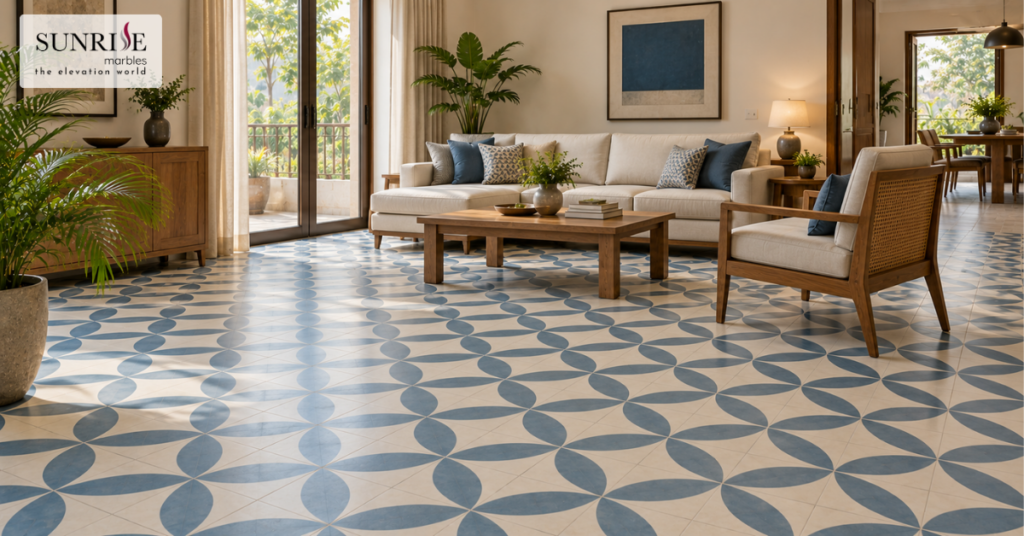
A two-colour Athangudi pattern can be a good option when you want decorative flooring without a very strong colour mix.
Blue and white combinations can create contrast, while earthy tones can give a warmer appearance. Other combinations may work depending on the walls, furniture and lighting already present.
Instead of choosing a colour because it looks good in a catalogue, compare physical samples with the room’s existing finishes. Colours can look different under natural and artificial light.
How to Choose the Right Athangudi Tile Design
Start with the room, not the tile catalogue. Look at its size, lighting, furniture and existing finishes before selecting a pattern.
Then compare the designs based on:
- Motif scale: How large or detailed is the repeated design?
- Colour intensity: How strongly will the floor stand out?
- Pattern repeat: What happens when several tiles are placed together?
- Visual density: Will the pattern balance or compete with the rest of the room?
A sample that looks simple on its own may become much stronger when repeated across a full floor. Viewing several pieces together gives a better idea of the finished result.
Sunrise Marbles offers Athangudi tiles in different colours, motifs and custom designs. Comparing several physical pieces before finalising a layout can help you judge the pattern, colour and overall fit with the room.
If you want to explore the available product range, see the Athangudi tile collection
Where Can Athangudi Tiles Work in a Home?
Space | Design approach |
Living room | Use a floral or geometric pattern as the main floor feature |
Courtyard | Pair traditional patterns with simple, natural-looking materials |
Verandah | Use patterned flooring to add traditional character |
Entryway | Create a defined statement area with a pattern or border |
Pooja space | Use the pattern selectively around the main focal point |
The same pattern can feel very different depending on how much of the room it covers. Sometimes a smaller application creates a stronger result than using decorative tiles everywhere.
Plan the Layout Before Installation
Patterned flooring needs some planning before installation. Decide where the design will begin, how it will meet the walls and how the repeated motifs should line up with doors, furniture and other important points.
If you are using a border or central design, plan its position before the tiles are laid. Also check the selected product’s size, intended application and care instructions.
If you are comparing Athangudi with another flooring option, you can also compare Athangudi and Terrazzo flooring before making your final choice.
Conclusion
The best Athangudi tile ideas are not always the most elaborate. Floral patterns can strengthen a traditional interior, geometric designs can add structure to a modern room, and borders can introduce decorative detail without covering the entire floor.
Choose the pattern by looking at the complete room rather than one tile at a time. When the motif, colour, scale and surrounding finishes work together, Athangudi tiles can become a natural part of the home’s design.