Choosing bathroom wall tiles is about more than finding a colour or pattern you like. The right tiles should work with the bathroom’s size, lighting, fixtures, floor and overall design while being suitable for everyday conditions. From clean marble-look surfaces to decorative mosaics, different tile styles can create very different visual effects.
What are the best bathroom wall tiles?
The best bathroom wall tiles include porcelain, marble-look, subway, large-format, stone-look, and mosaic tiles. Porcelain and large-format tiles are practical choices, while marble-look, subway, and mosaic tiles work well for different bathroom styles.
5 Best Bathroom Wall Tile Ideas
Marble-Look Tiles
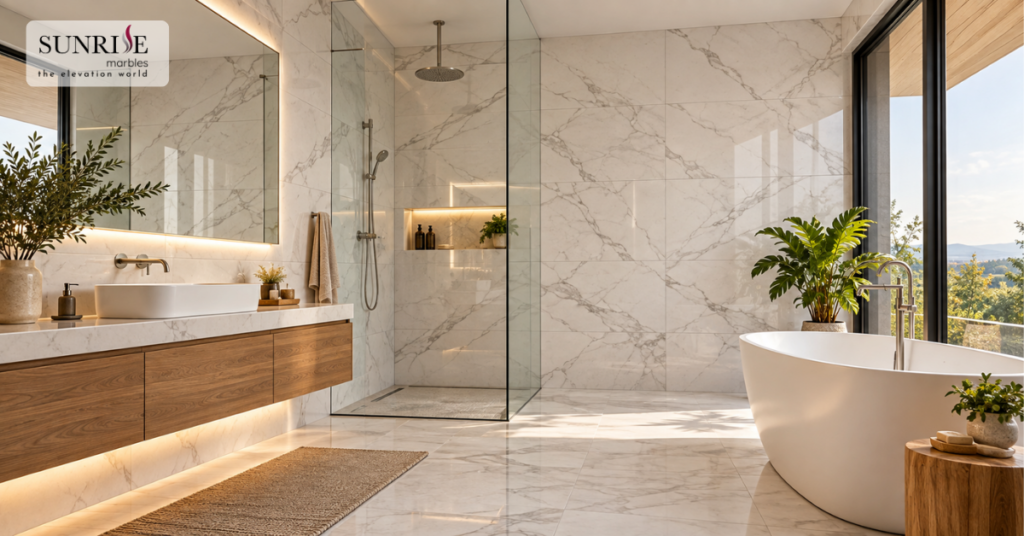
White or light-grey marble-look tiles can give bathroom walls a clean and premium appearance. Their subtle veining adds visual interest without requiring a strong decorative pattern.
Large-format marble-look tiles can be particularly effective because fewer grout lines create a more continuous wall surface. This can help smaller bathrooms feel visually less crowded.
When choosing marble-look tiles, compare the veining with your bathroom’s floor, vanity and fittings. A heavily veined design can become the main focal point, while softer patterns can create a quieter background.
Subway Tiles
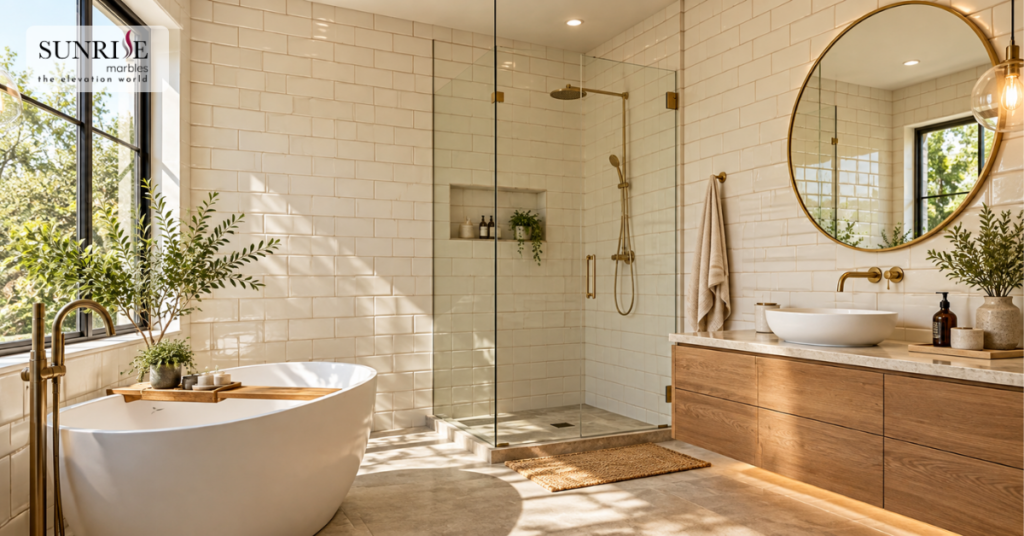
Subway tiles are simple rectangular tiles that can suit modern, classic and minimalist bathrooms. Their straightforward shape makes them flexible enough to work with different colours, fittings and interior styles.
The installation direction can also influence how the bathroom feels. Vertical installation can draw the eye upward and make the wall appear taller, while horizontal layouts can create a wider visual effect.
Grout colour is another important consideration. A contrasting grout can emphasise the individual tile pattern, while a similar grout colour creates a more seamless appearance.
Large-Format Porcelain Tiles
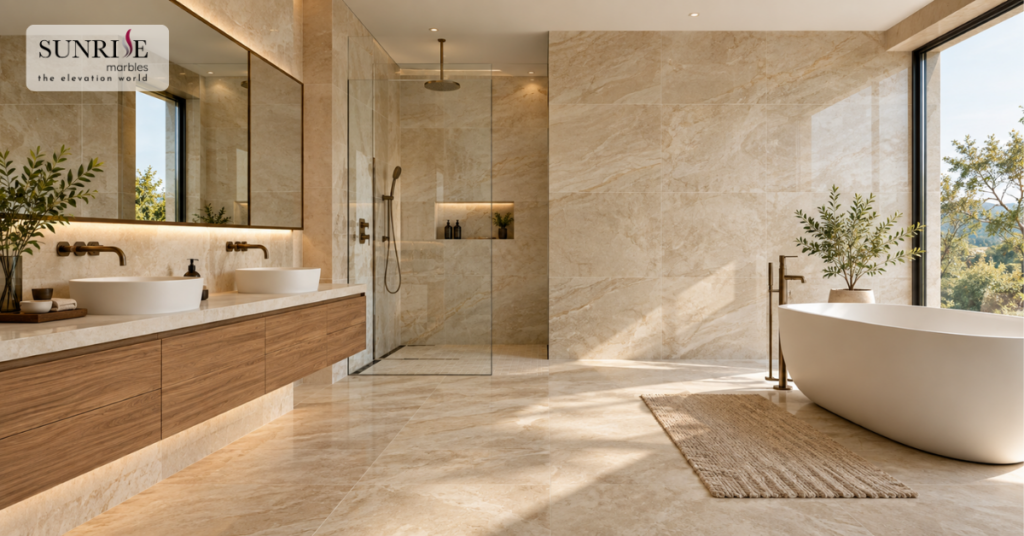
Large-format porcelain tiles, including formats such as 600×1200 mm tiles, can create a spacious and continuous appearance on bathroom walls. Their larger surface area means fewer grout joints are visible across the finished wall.
This approach can work particularly well in contemporary bathrooms where a clean, uncluttered appearance is preferred.
Before choosing a large format, consider the bathroom’s wall dimensions and installation conditions. The layout should be planned carefully so that cuts and joints work naturally around doors, corners, fixtures and other fixed elements.
Textured or Stone-Look Tiles
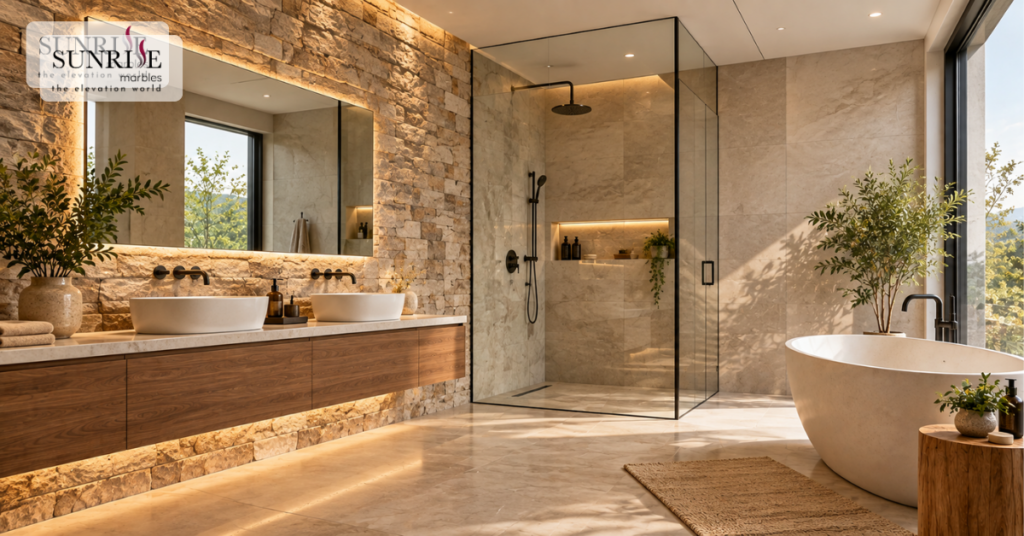
Textured or stone-look tiles can introduce depth and natural character to bathroom walls. They can work particularly well when you want to create a feature wall rather than use a decorative surface throughout the room.
A textured tile can highlight the shower area, vanity wall or another selected section. Subtle stone patterns can keep the design understated, while stronger textures can create a more noticeable focal point.
If other surfaces in the bathroom already have strong patterns or textures, consider using this style selectively. Keeping the remaining walls simpler can help maintain visual balance.
Mosaic Tiles
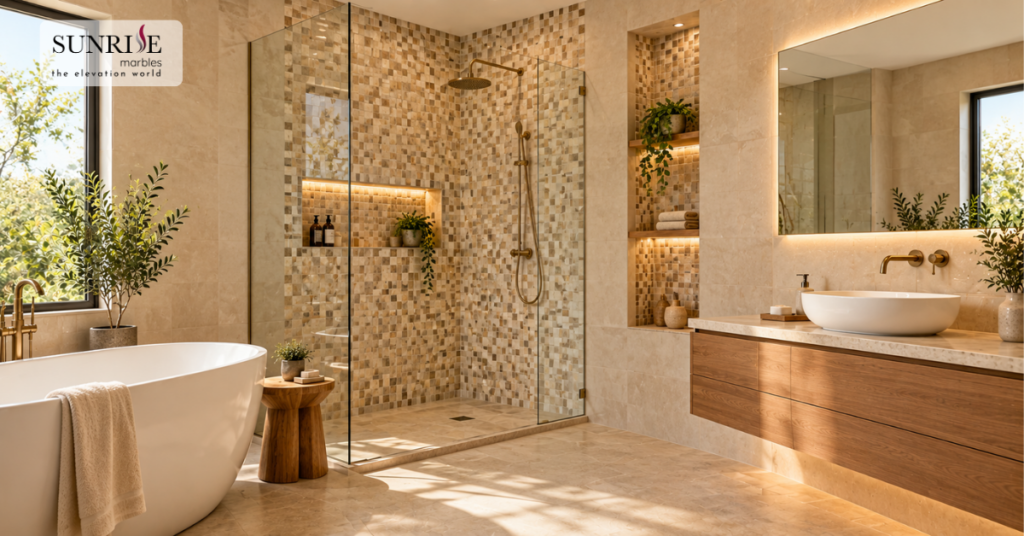
Mosaic tiles can add detail and personality to a bathroom without requiring an entire wall to be decorative. They can work well in niches, borders, shower sections or a defined feature area.
Because mosaics contain many individual pieces and grout joints, covering every wall can create a visually busy appearance and may require more grout maintenance.
For this reason, selective use can often create more impact. A mosaic strip around a niche or a small feature section can add contrast while allowing larger, simpler tiles to provide the main wall surface.
How to Choose Bathroom Wall Tiles
Start by looking at the bathroom as a complete space rather than choosing tiles individually.
Consider the size: Larger formats and lighter colours can create a more continuous appearance. Smaller decorative tiles can be used to introduce detail in selected areas.
Check the lighting: Natural and artificial light can change how tile colours, textures and finishes appear. Compare physical samples under lighting similar to your bathroom.
Coordinate with the floor: Wall and floor tiles do not need to match exactly. Related colours, textures or tones can create a connected design without making every surface look identical.
Think about grout: Grout contributes to the overall appearance of tiled walls. Decide whether you want the joints to blend with the tile or create visible contrast.
Check application requirements: Before purchase and installation, confirm that the selected product is suitable for the intended bathroom application and follow the manufacturer’s installation recommendations.
Common Bathroom Wall Tile Mistakes to Avoid
One common mistake is choosing tiles only from online photographs. Screen images may not accurately represent the colour, texture or finish of the actual product.
Another is combining too many strong patterns. If the floor, walls and decorative areas all compete for attention, a bathroom can feel visually crowded.
It is also important not to ignore tile size and layout. A design that looks attractive on one sample may appear very different when repeated across an entire wall.
Final Thoughts
The best bathroom wall tiles are those that balance appearance, scale and practical requirements. Marble-look tiles can create a refined surface, subway tiles offer a simple structured style, and large-format porcelain can reduce visible grout lines. Textured or stone-look tiles can create a feature wall, while mosaics can add focused decorative detail.
Before finalising your selection, compare physical samples, consider the lighting and surrounding finishes, and check the product specifications and installation requirements. For additional flooring and surface options, explore Sunrise Marbles’ flooring collection.