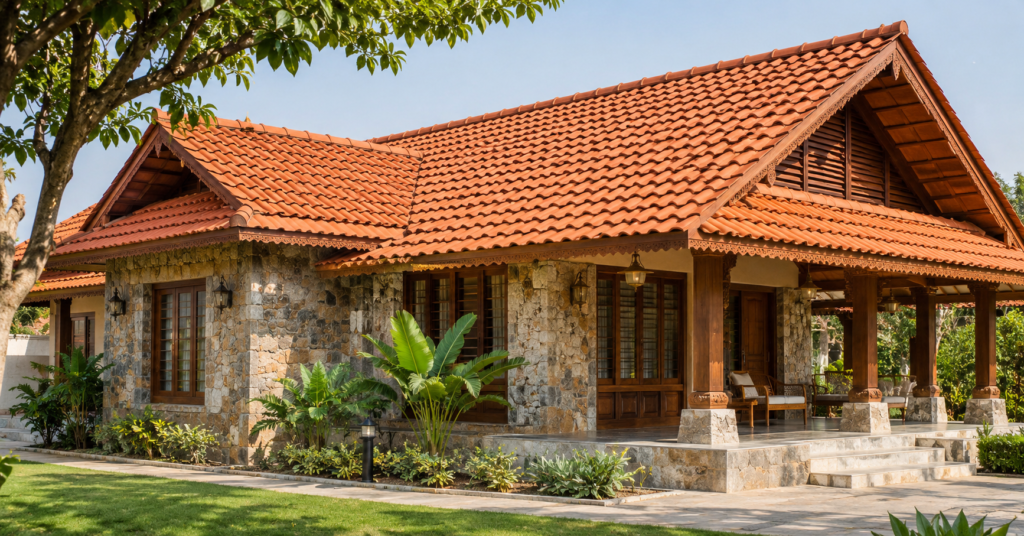
Clay roof tiles have been used on houses in our region for many years. Many people now choose them again for villas, farmhouses and weekend homes. If you are planning clay roof tiles for your own house, a few checks before buying can save you a lot of money and trouble. This guide explains the types, how long clay tiles last and what to ask before you place an order.
Clay roof tiles are made from baked clay and fixed in overlapping rows on a slanting roof. With proper fixing and basic care, they can last for many years. Before you buy, check the tile type, the weight your roof can take, the slope of the roof and whether matching ridge and end tiles are available.
What Are Clay Roof Tiles?
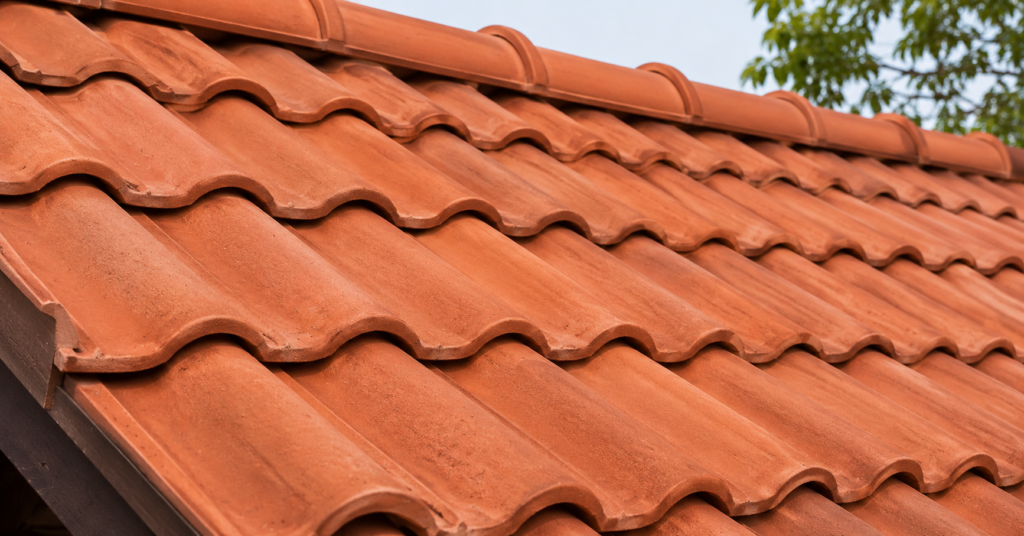
Clay roof tiles are made from clay that is shaped and baked at high heat. Baking makes the tile hard and strong against sun and rain. The tiles overlap each other, so rain water runs down and does not enter the house. Sunrise Marbles has roof tiles in its earthen clay products range, along with bricks, flooring and jali blocks. For a matching floor inside the house, see our guide on terracotta floor tiles.
Common Types of Clay Roof Tiles
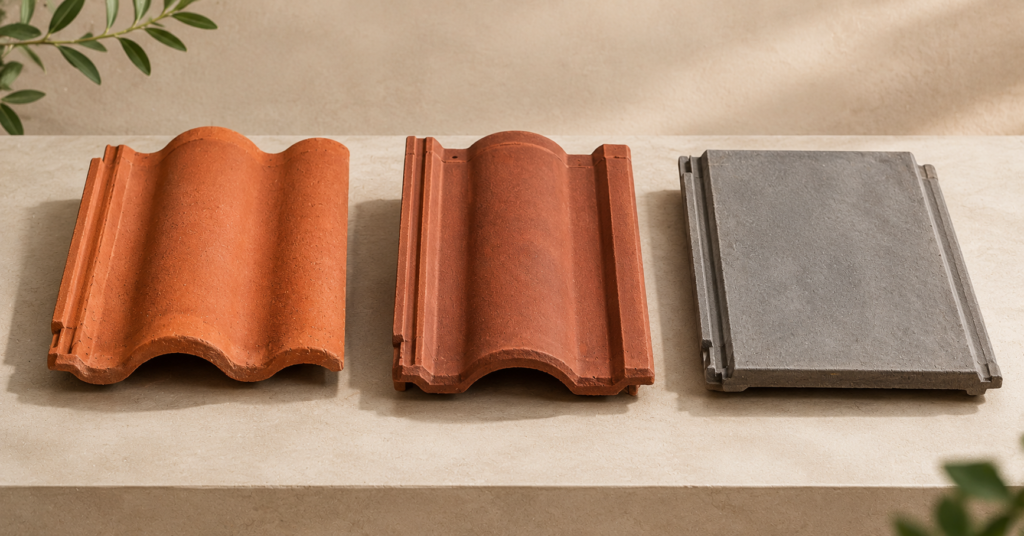
Names change from shop to shop, so look at the shape and not only the name. Most tiles come in three types.
- Curved (half-round) tiles. These are fixed in alternate rows. They give the old barrel look you see on heritage houses and resorts.
- Interlocking tiles. Each tile locks into the next one, so fixing is quicker. Mangalore tiles are the best-known example in south India.
- Flat tiles. These overlap in neat rows and give a simple, modern look.
Ask which shapes are available first, because the shape decides how the tiles are fixed.
How Long Do Clay Roof Tiles Last?
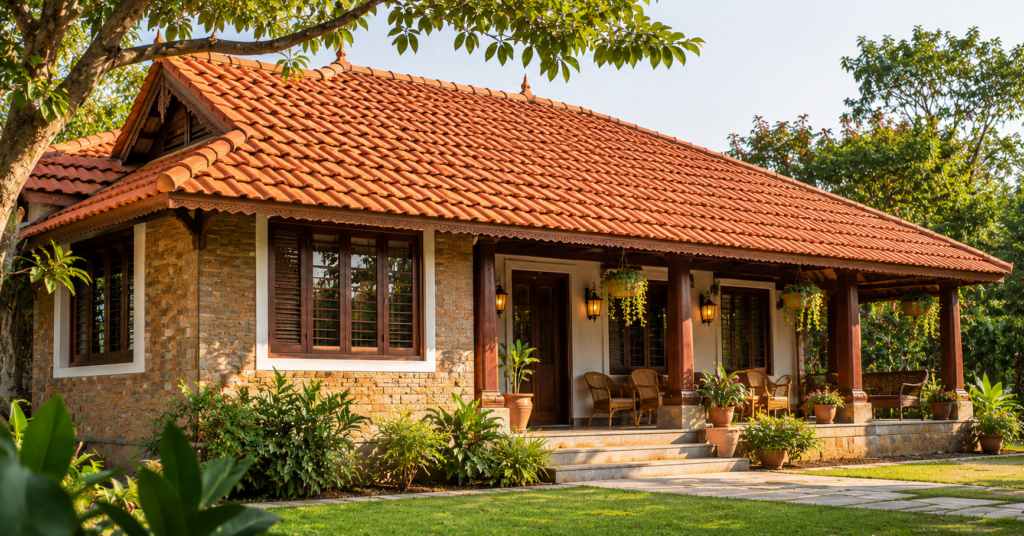
With proper fixing and basic care, clay roof tiles can last for many years. Clay does not rust or rot. The colour is part of the clay itself, so it does not peel like paint. Roofs usually give trouble early because of poor fixing, a weak roof frame, or broken tiles that nobody replaced.
Roof Slope and Weight: Check These First
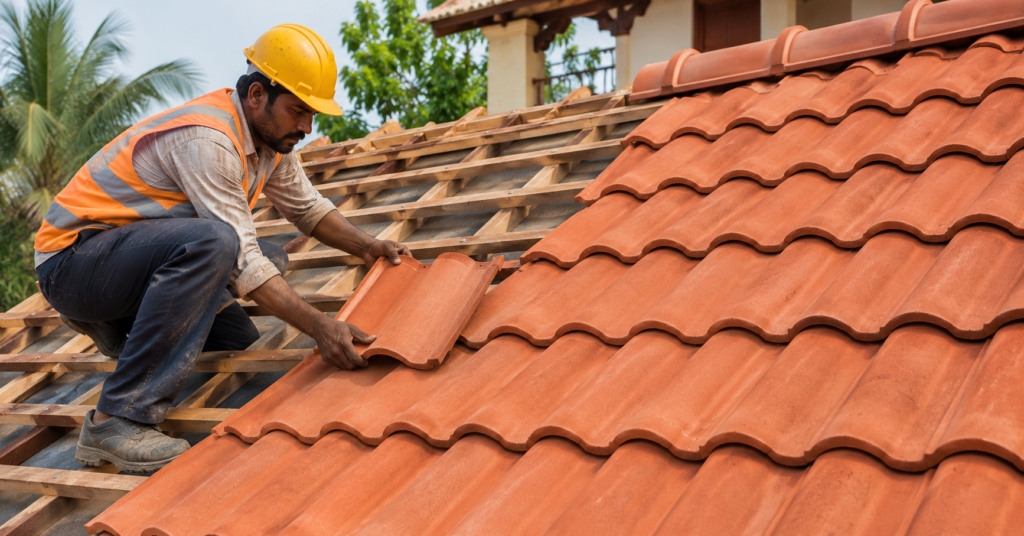
Clay tiles are heavier than many other roofing materials. Before you buy, ask your engineer or mason to confirm two things.
- Can the roof frame take the weight? The frame and the strips (battens) that hold the tiles must be strong enough for the tile you choose.
- Is the slope correct? Clay tiles need a slanting roof, and the minimum slope depends on the tile shape. Ask your supplier for the exact slope for your tile.
What to Compare When Buying Clay Roof Tiles
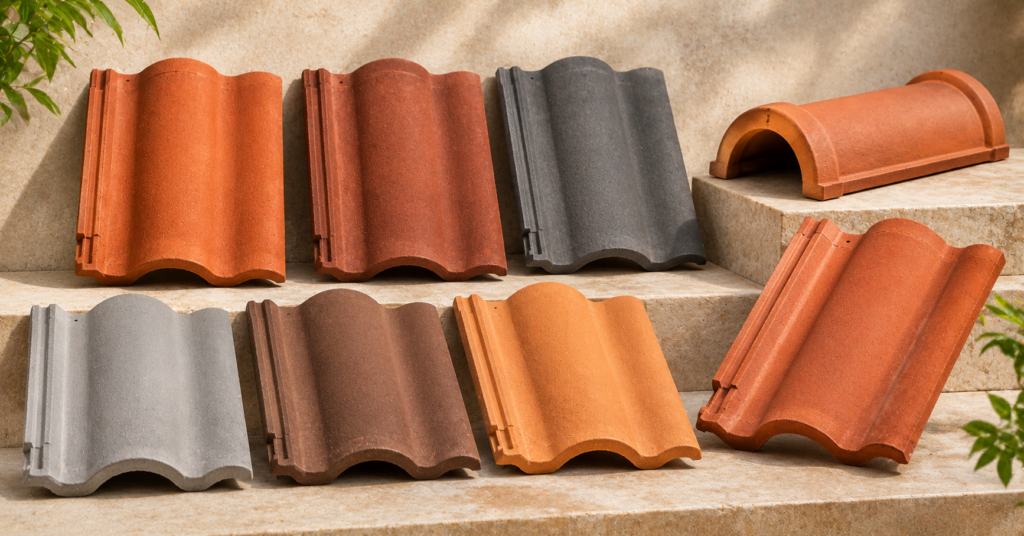
What to check | What to look for | Why it matters |
|---|---|---|
Tile shape | Curved, interlocking or flat | Decides the look and how tiles are fixed |
Size and weight | Weight of one tile and number of tiles per square metre | Tells you the load on your roof |
Colour | Samples from the same lot you will receive | Colour can differ from lot to lot |
Surface | Plain, rough or glazed (shiny) | Changes how the roof ages and how easy it is to clean |
Ridge and end tiles | Same colour as the main tiles | Needed to close the top line and the edges |
Extra tiles | A few spare tiles | Covers breakage and future repairs |
Always ask to see tiles from your own lot, not just the display piece.
How to Look After a Clay Tile Roof
A tile roof needs very little care, but check it once a year.
- After the rainy season, look for cracked or slipped tiles and change them early.
- Brush off moss in shady patches with a soft brush. Do not use strong chemicals, as they can stain the tiles.
Conclusion
Clay roof tiles suit homes that want a warm, traditional look and a roof that lasts. To see the tiles and talk about your roof, visit Sunrise Marbles at Srinagar Colony Main Road, Yousufguda, Hyderabad. Get Directions to Our Showroom, contact our team on +91 92465 22030. You can also read our guide on earthen clay building materials for modern homes to see what else clay can do.