The living room sets the tone for your home, and the floor strongly influences its look and feel. From marble-inspired surfaces to warm wood-look finishes, the right floor can complement furniture, walls and lighting for everyday use.
What are the best living room floor tile options?
Vitrified, porcelain, large-format, natural stone and wooden-finish tiles are popular choices for living room floors. The right option depends on room size, foot traffic, interior style, maintenance needs and budget.
7 Living Room Floor Tile Design Ideas
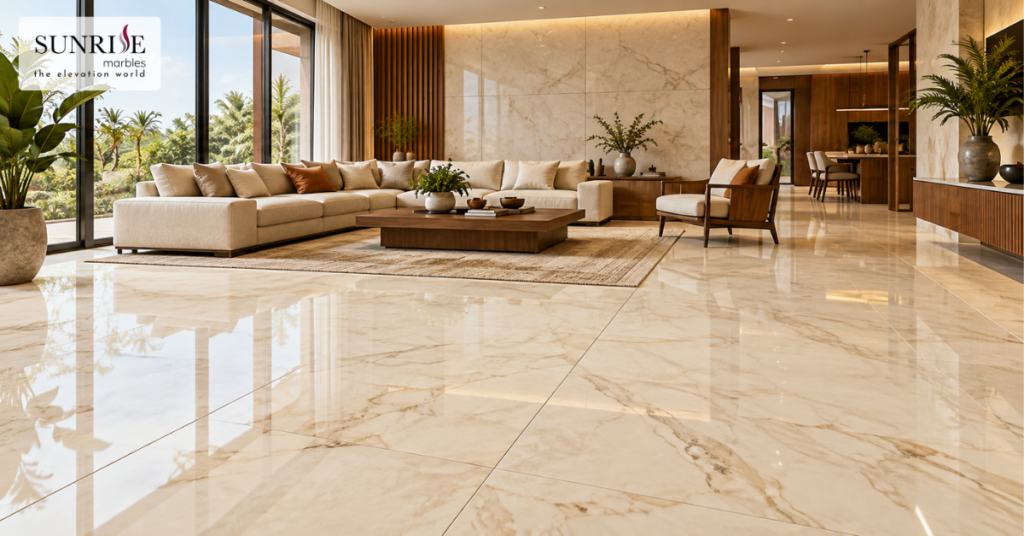
Large-Format Marble-Look Tiles
Large-format marble-look tiles create a clean, continuous appearance with fewer visible joints. They can make a living room feel refined and spacious with simple furniture and a restrained palette.
Choose veining according to the rest of the interior. View a physical sample because pattern, texture and tone can look different across a larger surface.
Classic Vitrified Tile Flooring
Vitrified tiles are a practical choice when durability and easier maintenance matter. They come in many colours, patterns and finishes, making them suitable for contemporary and traditional interiors.
Consider how the tile works with your sofa, walls, curtains and fixed elements rather than choosing it only for its appearance.
Natural Stone Flooring
Natural stone can give a living room an organic, distinctive character. Granite and other natural-stone options work well in interiors that favour natural materials and natural texture.
Stone naturally varies in colour and pattern, so inspect representative samples if a consistent appearance is important.
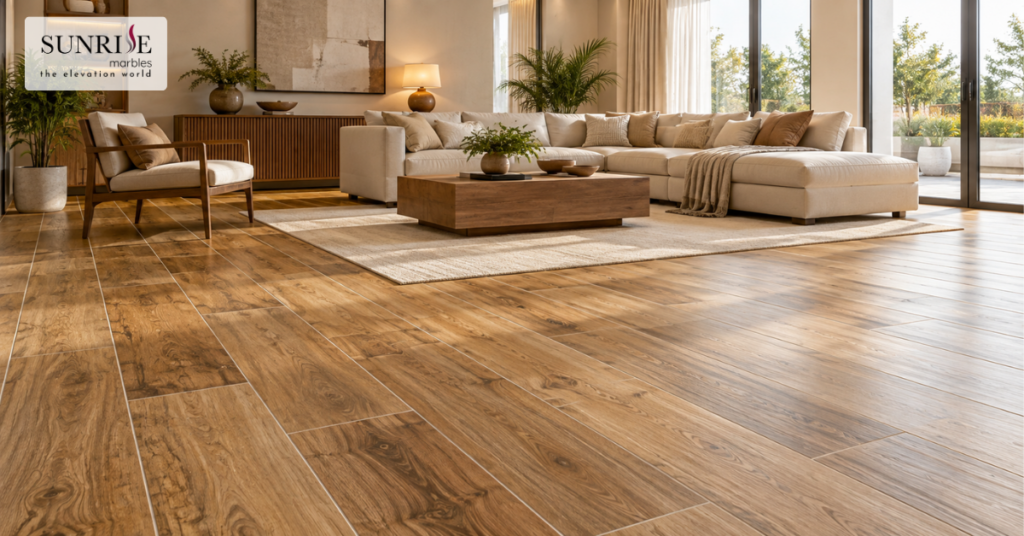
Wooden-Finish Tiles for Warmth
Wooden-finish tiles can bring visual warmth into a living room while retaining the practical qualities of tile surfaces. They suit neutral furniture and relaxed interiors.
Pay attention to plank colour, grain pattern and texture. See the wooden-finish tiles guide for more detail.
Light Neutral Tiles for an Open Feel
Beige, cream and other light neutral tiles can make a living room feel bright and open. They provide a flexible background for furniture, artwork, rugs and décor.
If the room receives limited daylight, lighter surfaces may help reflect available light. View samples in different lighting conditions because showroom lighting can differ from daylight at home.
Textured or Stone-Look Tiles
Textured and stone-look tiles can add depth without relying on bold patterns. They add character while keeping the interior understated.
Consider how the texture looks both close up and from the seating area.
Patterned Tiles for a Statement Floor
Patterned tiles can turn the floor into a focal point when the rest of the room is simple. Geometric layouts and decorative motifs can give the space a distinctive personality.
If furniture, walls or accessories already have strong patterns, a quieter floor may create a more balanced result.
How to Choose the Right Living Room Floor Tiles
Choose living room floor tiles based on room usage, size, lighting, style, finish and maintenance needs.
Start with how the room is used and how much foot traffic it receives. Then consider tile size and room proportions. Large tiles can reduce visible grout lines and create continuity, while standard sizes offer flexibility for different layouts and patterns. For detailed guidance, see the tile size guide.
Finishing also matters. Glossy surfaces can reflect light and create a polished appearance, while matte or textured finishes provide a softer visual character. Think about everyday cleaning and the way light falls across the floor.
Finally, coordinate the tile with furniture, wall colours and interior style. Samples are useful when comparing colour, texture, veining and pattern.
Common Mistakes to Avoid
Avoid choosing tiles only from an online image, ignoring natural light, or selecting a highly decorative design without considering the rest of the room. Check maintenance needs before finalising your choice.
Explore Flooring Options
Once you have narrowed down the style, finish and size, compare flooring options in person to see how different surfaces work with your space. Sunrise Marbles’ flooring options can help you explore different design directions.
Conclusion
The best living room floor tile design is one that looks right in your space and continues to work well in everyday life. Focus on proportions, lighting, furniture and practical considerations, then choose a design that brings those elements together.
Sunrise Marbles brings together a range of materials and design options for different interior styles, making it easier to explore ideas for your home. When making your final choice, compare physical samples and consider how the tile’s colour, pattern, texture and finish work with your living room before deciding.
Choosing flooring for a workspace as well? These tile ideas for offices cover reception areas, workspaces and meeting rooms.