Terracotta Brick Design Ideas for Homes and Commercial Spaces
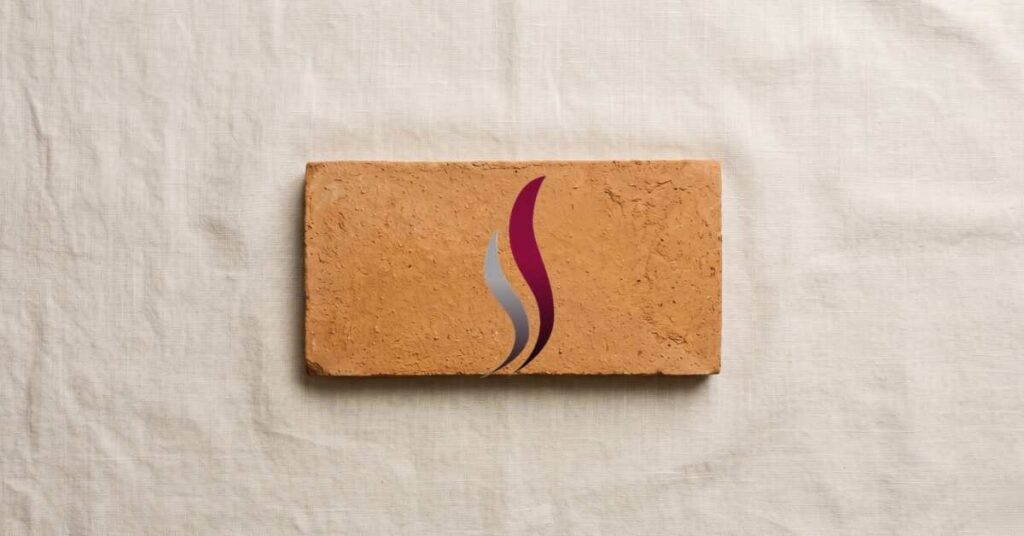
Terracotta bricks are clay-based architectural materials known for their earthy colours, natural texture and distinctive visual character. They can be used for feature walls, selected exterior applications, partitions and other architectural accents in homes and commercial spaces.
For homes and commercial spaces in Hyderabad, terracotta can work well when its colour, texture, dimensions and installation requirements are considered alongside the surrounding architecture. If you are exploring terracotta brick design ideas, focus on how the material fits the space rather than choosing it simply because it is trending.
What Are Terracotta Bricks?
Terracotta bricks are clay-based architectural materials known for their earthy colours and textured appearance. They can be used for selected façades, feature walls, partitions, entrance areas and decorative architectural details, depending on the product and installation requirements.
5 Terracotta Brick Design Ideas
Terracotta Brick Feature Walls
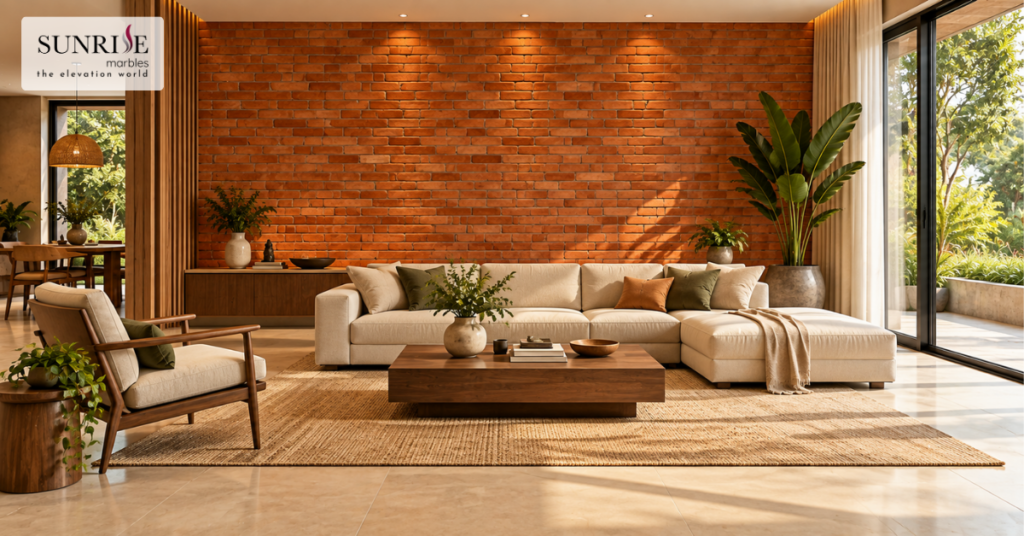
A terracotta brick feature wall can create a strong focal point in a living room, dining area, reception space or other interior setting. Its colour and surface texture can add warmth to an otherwise simple wall.
Pair the brickwork with understated furniture and finishes for balance. Warm wood, neutral fabrics and simple lighting can complement terracotta without making the room feel too heavy.
Terracotta Bricks for Exterior Accents
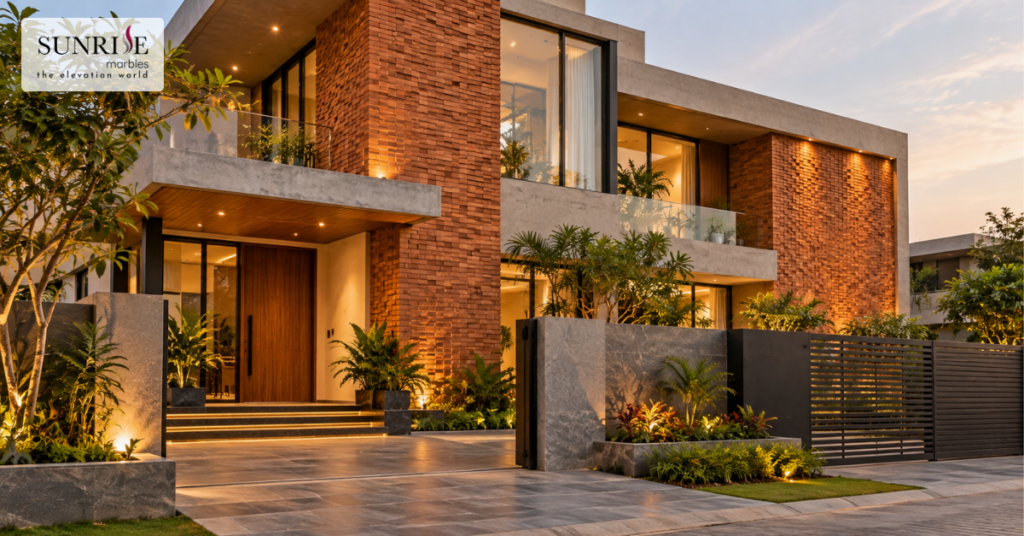
Terracotta bricks can be incorporated into selected exterior areas instead of covering an entire building. They can highlight an entrance, a particular wall or another architectural section.
Their warm tones can work alongside concrete, glass, metal and natural stone. Keep the application proportionate so the terracotta creates contrast without becoming the only focus.
Terracotta Brick Walls for Warm Interiors
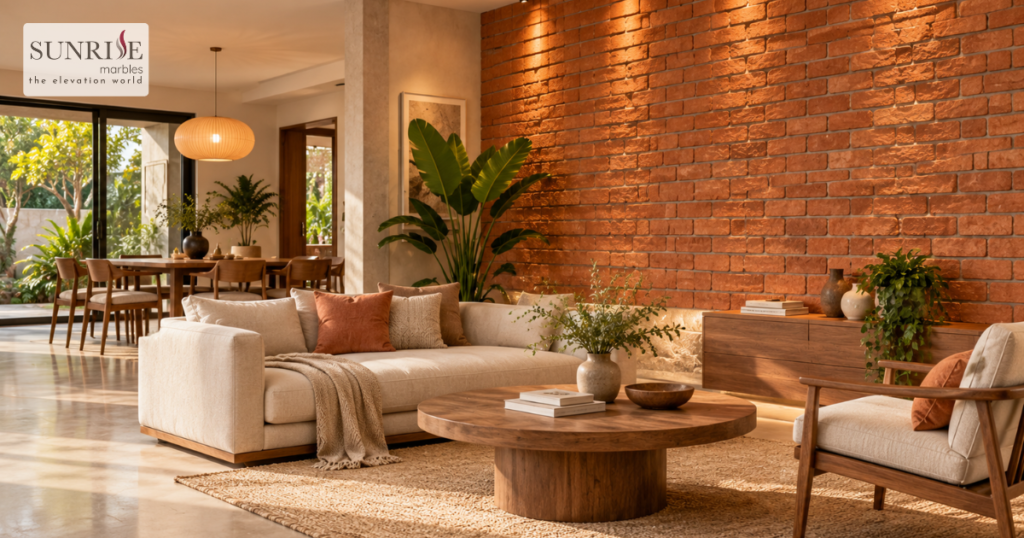
Terracotta brick walls can suit interiors that aim for a warm, earthy atmosphere. They work particularly well with rustic, traditional or natural design styles.
A full wall is not always necessary. A smaller section behind a seating area, dining space or display unit can introduce texture while keeping the rest of the room simple.
Terracotta Brick Partitions
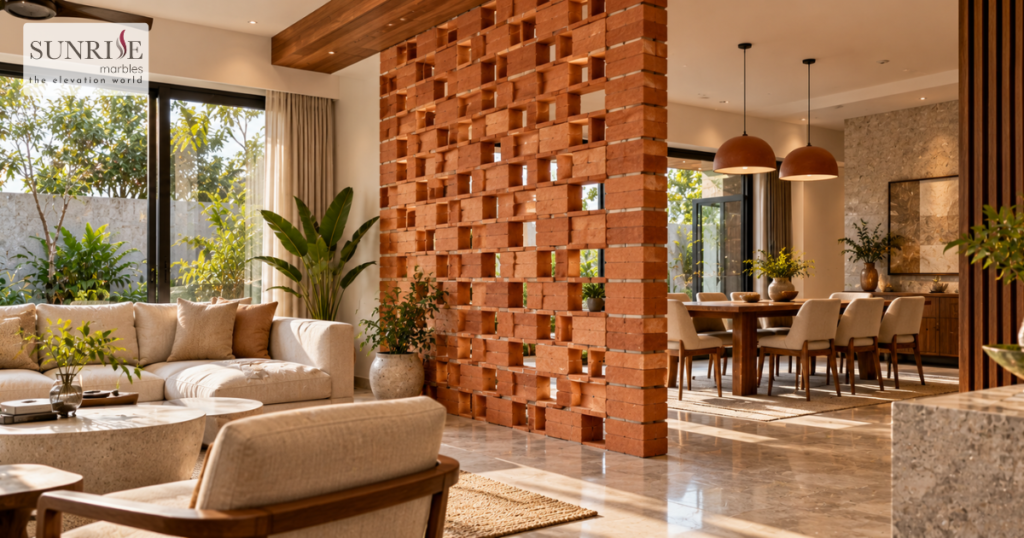
Terracotta bricks can be considered for decorative partitions where you want to separate areas without making the space feel completely closed.
A partition can distinguish living and dining areas or add definition within a larger commercial interior. Pattern, spacing and proportion should depend on how much openness you want to maintain.
Terracotta Bricks for Entrance Areas
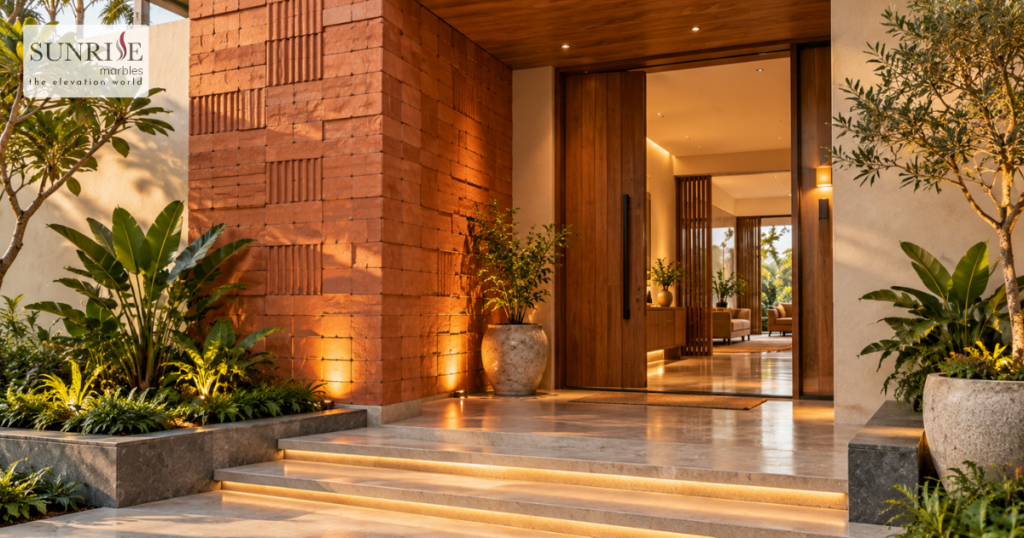
Entrances provide another opportunity to introduce terracotta in a controlled way. A terracotta brick wall or architectural detail can create a warmer transition between exterior and interior spaces.
The effect can feel more cohesive when a similar colour or texture is subtly repeated elsewhere in the property.
Terracotta Bricks for Different Architectural Styles
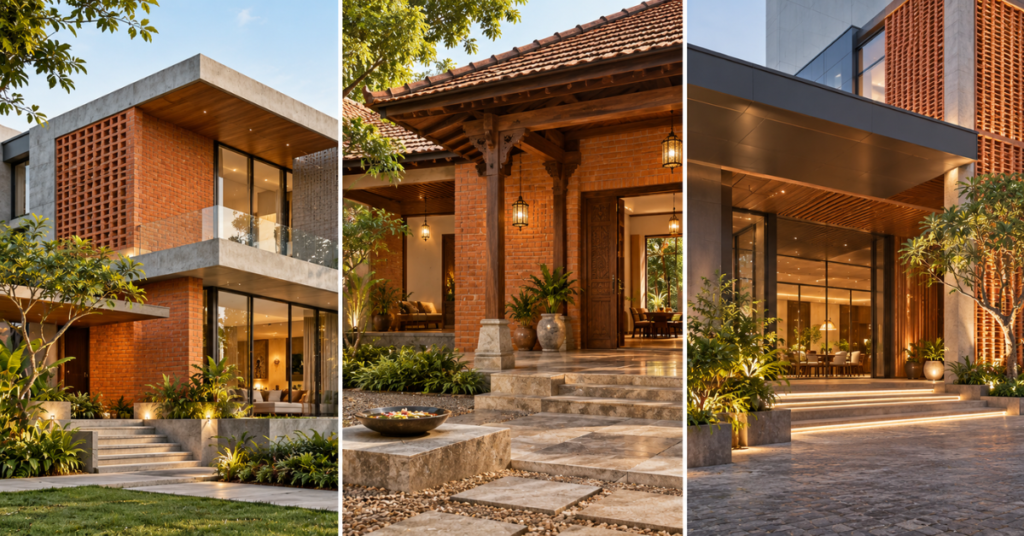
Architectural style | How terracotta can be used |
Contemporary | Pair with concrete, glass, metal and clean lines for selective warmth. |
Traditional | Combine with wood, natural stone, earthy colours and textured finishes. |
Commercial or hospitality | Use selective accents in reception areas, restaurants or other public spaces. |
The surrounding materials matter as much as the brick itself. A simple terracotta application can look very different depending on the flooring, furniture, lighting and wall finishes around it.
How to Choose Terracotta Bricks
Start with the design. Consider colour, texture, dimensions, pattern and surrounding materials. Wood, stone, concrete, metal and painted surfaces can influence whether terracotta feels subtle or visually dominant.
Then check application suitability. Consider whether the selected product is intended for interior or exterior use, the substrate, environmental exposure and the recommended fixing or installation method. Suitability depends on the specific product and installation conditions, so not every terracotta brick should be assumed suitable for every application.
Before finalising a terracotta brick, compare a physical sample against the actual wall, surrounding materials and available lighting. Check the dimensions, surface texture and colour variation rather than relying only on digital photographs. This can reveal differences that are difficult to judge from a screen.
If you are comparing terracotta with other clay-based architectural materials, you can explore Sunrise Marbles’ earthen clay products for additional options.
Common Mistakes to Avoid
Choosing terracotta only because its colour looks attractive is a common mistake. The material should also suit the scale and character of the space.
Another mistake is combining too many strong textures. If terracotta, stone, wood and patterned surfaces are all prominent, the result can feel crowded. One dominant material with supporting finishes often creates better balance.
Finally, do not choose the appearance first and investigate installation later. Understanding the substrate and fixing requirements before finalising the design can help avoid practical problems.
Conclusion
The best terracotta brick design is one that works with the architecture around it. Compare colour, texture, dimensions and finish using physical samples, and consider the installation requirements before making a final decision.
Sunrise Marbles can help you explore terracotta and other architectural surface options for different interior and exterior applications.